Making Bedtime Boringly Predictable (in the Best Possible Way)
If there’s one word that can make a whole evening wobble, it’s bedtime. One night it’s stories and sleepy cuddles,…

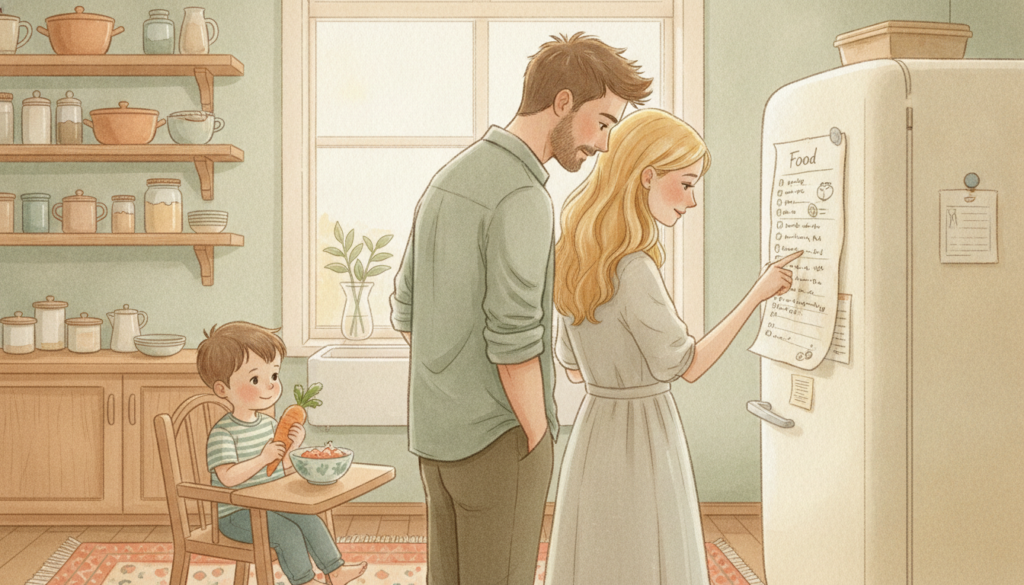
Our son was somewhere in the blur between first tastes and proper meals when we learned, quite abruptly, that food could be frightening. One ordinary teatime, one new food, and a reaction that turned us from relaxed second-time parents into people who read every label in the supermarket twice.
Here is the thing that saved us weeks of guesswork: we had been writing everything down. Not out of any great organisational virtue, but because we are chart people, and our weaning tracker was stuck to the fridge with everything our son had tried tallied on it.
So when the flare-up came, we did not have to rely on frightened memory. We could stand in the kitchen, look at the page, and see exactly what was new that week. The list of suspects went from “almost anything” to a handful of foods in one evening, and to wheat within days. When we sat down with the GP we brought the chart with us, and instead of starting from scratch we started from evidence. Referral, testing, confirmation: severe wheat allergy.
We will always be glad we wrote things down. If you take one practical thing from this post, take that.
We decided early that home would be the safe place. One kitchen, one set of rules, nothing on a shelf that could hurt him. It felt drastic for about a fortnight and then it simply became how our kitchen works.
The education was discovering where wheat hides. Bread and pasta you expect. Soy sauce, gravy granules, some sausages, most play dough recipes and a startling number of sweets you do not. Label reading is a skill like any other: slow and anxious at first, then automatic. UK allergen labelling helps enormously once you know its habits, because the fourteen major allergens must appear in bold in every ingredients list.
Our daughter, for the record, has become the world’s fiercest four-year-old label inspector. Nobody guards a biscuit tin like a big sister.
Home you can control. The world takes more planning. Nursery has our son’s allergy plan and takes it seriously, which we have learned is a question worth asking directly rather than assuming. The medicine bag goes everywhere he goes, and everyone who cares for him knows where it lives and what to do with it.
Grandparents got a gentle briefing and a list stuck to their fridge too. Parties and cafes involve a quick conversation and, sometimes, his own food in a tub. It is rarely a drama. It is just part of how we leave the house now, the same way you check for keys.
The hardest bit is not the shopping or the cooking. It is the background hum of vigilance, especially in the early months. Every new food, every buffet table, every kind stranger offering a biscuit carries a little calculation with it.
What we can tell you from further down the road is that the hum gets quieter. The systems start carrying the weight for you: the safe kitchen, the briefed adults, the bag by the door, the habits of checking. Some days we entirely forget to think about it, and those days multiply.
One honest note to finish. This is our family’s story, not medical advice. If you suspect an allergy, your GP is the first stop, and if a reaction is ever severe, it is 999 without hesitation. But if you are standing in your kitchen tonight feeling the way we felt after that first flare-up, we wrote this so you would know: it gets so much more ordinary, and you will be better at it than you think.

Mum & Dad @ Cub & Compass
A UK family of four, sharing what works for us. We stay anonymous to protect our little cubs - here's why.
Keep wandering
 2 min read
If there’s one word that can make a whole evening wobble, it’s bedtime. One night it’s stories and sleepy cuddles,…
 4 min read
Precious Little Sleep: A Parent’s Guide to Baby Sleep Temperatures & More Welcome, fellow parents! Let’s talk about something we…
New guides, printables and the occasional small triumph - roughly once a fortnight.